


November 23-30 2025
GMA News
BSP still pushing for zero electronic fund transfer fees
The only way this “zero transfer fees” will work is if the infrastructure also allows for good speeds with minimal fees, like if PLDT and Globe makes fund transfer API calls from billers be computed lower or be excluded from billing computations. Easy for BSP to want it to be made free but everything in the world has a price and someone has to pay for it.
Incentives will always drive outcomes, as some say. So for this “zero transfer fees” thing get the goodwill of businesses, the country’s internet infrastructure should be good enough that the loss of transfer fees be very negligible to be waved off. Words are cheap for BSP, but them officials maybe doesn’t see that brute-forcing these kinds of changes erode business goodwill. Everything has a price, and someone will pay. But also, willing buy-in from the major players involved must be present. Won’t really work if someone feels they were roped in without their consent.
For me, seeing who we got as “senators” since 2000, I wish we had a better way of voting them in other than purely “numbers and overall ranking”. Some people have successfully gamed that already – they pack their “balwarte” as many as they could, get their names “out there” as much as possible, secure the needed national umbrella groups and alliances (and some candidacy guestings), get the needed support from bloc voter groups like INC, and they get a much better chance to win a seat. It’s a numbers game at the end of the day. Of couse some of them have the necessary “name recognition” as either a popular name or a well-known political entity, but that doesn’t really help that much when certain people know how to get the needed numbers.
I think a “per-region provincial average ranking” might produce a better set of senators that actually represent an entire country than simply accruing enough numbers to win a seat.
Personally, I think the senatorial election has been figured out ever since Erap Estrada got into the presidency. Loren Legarda, Rene Cayetano and Robert Jaworski got into the Senate – partly on the sheer strength of their names and great accomplishments outside of politics, they got under the right parties (Legarda and Cayetano was in Lakas, Jaworski in LAMMP), and accrued enough support to get their seats. Exceptions could be made for Tito Sotto and Ramon Revilla Sr. as their acting/television careers actively overlapped with their political careers, and they came up from a more genteel, distinguished political era.
Succeeding senatorial elections only fueled my theory and removed lingering doubts. The winners lists for them showed a consistent trend of voters choosing media personalities, celebrity household names, and children/spouses of prominent political families. Excluding the people who have a background in legal/law or has served as presidential secretaries or “presidential aides” like Bong Go, it’s like a row of people you’d scratch your head and think, “what the fuck are they doing here!?”, and it’s just sad.
So my suggestion as I said, is to revise the election process for Senators to start tamping down the factors of having packed bailiwicks, bloc voting support, or joining political parties with strong regional support. My suggestion is a “per-region provincial average ranking”.
The Philippines has 18 administrative regions spread across the islands. Each region has provinces, excluding the NCR, whose equivalent of provinces are cities. Take for example, Region 7 (Central Visayas) only has two provinces (albeit big ones) – Cebu and Bohol. Each province can vote for senators, and once election is finished 100%, the senators are tallied from 1st to, say, 40th. The rank becomes the important number and not the vote, and the winners are the ones who get to the cumulative regions’ voted average ranking score to be in the top 12. No more “insurmountable” million-vote leads, just averages playing out.
So say Senatorial #1 got rank 2 in Cebu and rank 5 in Bohol, so his regional average rank for Region 7 is 3.5. Senatorial #2 got rank 5 in Cebu and got left in the dust in Bohol for rank 19, his regional rank for Region 7 is 12. The Senatorial #1 got a higher ranking for Region 7 because he obtained strong support from both provinces, while #2 got a much lower ranking because while Cebu favored him, he was much less favored in Bohol. The candidates who get strong support from the provinces obtain a higher ranking, while those who get mixed support get lower. This way, the bailiwicks’ power get tamped down to a manageable extent – no more packing the votes, the ranking gets the priority, so that if Candidate X gets 400k votes for first place and Candidate Y gets 210k votes for second place, Candidate X only gets rank 1 and Candidate Y gets rank 2, leveling their field from vote numbers to vote ranking. They can pack the votes, but all they can get is an isolated provincial ranking and not added to a national voting accumulation.
I tried to run the numbers for the 2025 senatorial election using this ruleset, and a suprising result turned up – a lot of the “winners” ended up as outside the Magic 12. Those who were consistently in a Top 12 ranking (or within Top 18) in many regions and provinces ended up winning the overall averages and got in the final Top 12, while those who either were consistently poor or had poor showings in a lot of provinces (despite getting high averages in certain provinces) ended up with lower averages.
I think the supposed “AI regulations” will come eventually, but a lot of the things done before the bill becomes law will be grandfathered in. That’s the nature of law – it’s legal until it isn’t anymore.
And capitalism ain’t waiting for that. I’ve seen dozens of ads on Youtube and Facebook that were clearly done using generative AI already. Startup companies are already popping up offering AI services to companies, like AI-made virtual clothing models for online shops. And if companies decide that hiring those are cheaper, they will.
And yeah, the “AI bubble” will pop eventually – but not within a few more years. However, most of the major companies are insulated against that already. NVIDIA and Qualcomm will be fine. Amazon, Microsoft, Apple, SpaceX and Meta will be fine. Bigger companies with fingers in other pies will be fine. They’d eat losses with a grin and move on. Others, not so much. Horror stories will come out of them, but the biggest beneficiaries of the AI rise had built their moats already.
This is the drawback of having very old people at the helm of legislations around the world. They may have the wisdom of ages that younger men would require decades to obtain, however, flexibility and adaptability is certainly out of their capabilities anymore. They’re bamboos that have stood for ages, survived winds and storms, but have lost the ability to bend. And with that, a rapidly advancing tech requires a matching resolve to adaptation, and unfortunately, combined with bureaucratic regulation, red tapes and numerous conflicts of interests, we’re fucked. Capitalism ain’t waiting on these turtles.
Businesses and content creation have adapted fast. I’ve walked around Singapore for the past few months, and I’ve seen AI-assisted things. Tarpaulin posters for vaccination drives. Hawker stall signs and menu boards. Facebook posts of restaurants touting their latest foods. Signboards for schools. Printed handouts. All of them could’ve been made by an intern with a prompt engineering certificate from Udemy or something. Even on YouTube, lots of videos are starting to pop up, and many of them might have been made with AI.
And not to mention, entire businesses have sprung up around AI and using AI. In the same breath that people mention AI “taking away jobs”, it sure has made a similar amount of jobs available to other people as well.
But someday, this spike of AI will soon come to a stabilized rate. Regulations will get done someday (whenever the senators’ health medications work long enough), market saturation will happen, and subscriptions soon plateau. When that happens, the survivors will be the ones with “other businesses” that can fold in whatever they invested in AI and use it in their other businesses. NVIDIA and Qualcomm certainly ain’t waiting for that to happen to them – and they’re likely to be the stabler ones – because they have embedded themselves into every single businesses interested in scaling up tech-wise and have been willing partners to any and all. Amazon would just use AI in AWS, Microsoft would just use AI in other parts of their business instead of choking people with Copilot, SpaceX will probably pivot to providing more compute rental and making their own version of AWS (not to mention rockets lol), Google will keep their shitty AI in their search results and fold AI into their many ventures, and Meta would just fold their AI into their social media services and products. All these companies have the flexibility of pivoting because they had viable businesses before AI came along. OpenAI and Claude, on the other hand… if the AI bubble really bursts (for real this time), they’re fucked with renting so much compute but so much less demand. Their layoffs will be horrific, that much is certain.
Bakit kaya pag eleksyon sa partylist e puro “maka-masang” kayumanggi na tao yung nasa entablado na may mic, pero pag nasa Kongreso e yamang naka-gluta na matapobre yung nakaupo?
Magic, isn’t it? Election season comes, and these partylist groups start their marketing cycle, and boy they know marketing. Brown common people get on stage to talk, and when the inevitable happens when they have to give the actual representative nominees some airtime, they make them dress as “casual” as possible. Maybe less makeup. If they could come in “poverty cosplay”, they probably would. I’m not lumping them all in one scheming bunch, but one could have a discerning eye and see which ones I referred to.
And then, when it’s time to submit the nominees and have them sit in Congress, one would wonder who these suddenly-whiter crisply-dressed folks in SUVs came from? We talking about “marginalized sector” partylist groups here, and these folks look like they belong in Forbes Park.
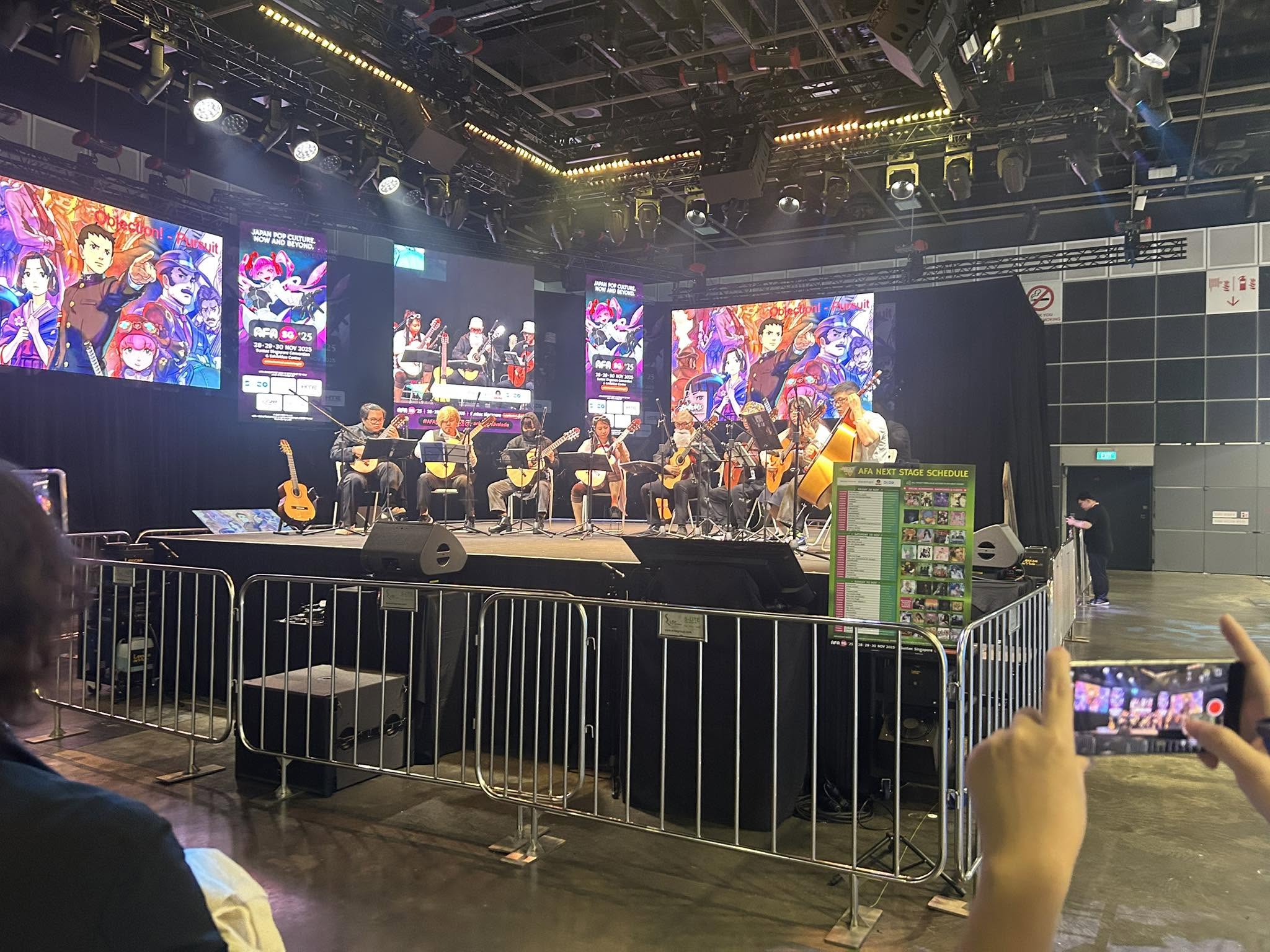
My Black Friday was here earlier 😉 #AFASG25
For me, Singapore’s anime conventions are a treat, really. Major anime/publishing companies come over with their big displays and merch, cosplayers come in droves, sellers come in droves too, and at least from my experience with Gamescom, AFA and Doujima, they’re pretty much well-run machines with a whiff of chaos and whimsy. I always find myself spending a good amount of money on merch I find in these conventions.
Be wary when current and former politicians start attending rallies. Sure, they might be exercising their rights as citizens. Some may also be actually good people. But just be wary nonetheless, consider it practice to identify the opportunists.
I’m saying this because it’s a disgusting marketing tactic, and the legacy media is an equally disgusting whore when it comes to this practice. To be clear, I’m referring to the “Trillion Peso March” and “Baha sa Luneta”, both common-man organized rallies to show public discontent over the findings so far over the flood control scandal.
And with anything else, it got hijacked by politicians wanting to boost their “goodwill stock” and personalities – both entertainment and content creation – turning what was supposed to be a public protest into a public sideshow. And disgustingly, the media found a way to tap into that content as well. Their article gleefully listed “here are the celebrities spotted attending the rallies” like it’s some kind of importance to their intelligent readers.
To be fair to these people, they have rights to join these rallies. They have one vote to give, same as everyone else after all. But when their presence becomes a notable distraction and reeks of political jockeying, I sincerely hope they regain some sense and just stay at home and watch the common man fight for the right to be heard by the powers.
The news media rebranding their online show/s as “podcast” is a clear and unmistakable white flag, an admission of decline they have never shown before. But it’s also clear they do not yet know why or how the non-news podcasts work – for example, GMA News put their “24 Oras” news show on Spotify and Apple Podcasts… like, fuck, it’s just the news show as is. Their “Share Ko Lang” thing as well, it’s very much a late-2000’s shitty talk show but they called it a “podcast”.
It’s obvious that the news media doesn’t really care about actual podcasting and podcast quality, they just want to ride the wave and reap whatever rewards or visibility they can get out of it. No different from politicians, ey?
In my opinion, the legacy media already thinks they are partially cooked. There will always be a place for them, but the once-dominant place they had on the public is diminishing every year, driven by the consumer push towards other forms where they can read the news or watch entertainment. And so the legacy media has bent towards adaptation – mimicking the things that the consumers are gravitating to. That includes podcasting, one of their white flags of surrender to the new media. And surprise surprise, they suck at it too.

When the news media have to generate social media posts from content creators and pass it off as some journalistic effort… well, again, it’s the slow death, innit?
And as an unfortunate addition to the previous post, the legacy media is treating content creators as… free content. To be fair, it is a good thing for content creators to get free eyeballs to their content with the newspapers using them as a means to pad things out on a slow news day outside of the flood control teledrama, but it’s just one sad tale of the creeping end of integrity of the legacy media, innit? I remember the good old days when these things get independently verified by the news media with actual reporters/investigators doing the hard stuff – like reporters going to the supermarket themselves and trying out grocery shopping to verify certain news things getting around, now they just see content creators do the same thing and they just see free content.
AI prompt for the post image:
Create for me a collage-style image – a collection of fictional social media posts, each portraying a certain topic. Strictly stick to using these topics:
- suspended basketball player wearing a light blue jersey
- hawker stalls selling nasi kandar
- a vicar seated at a richly paneled office
- someone using a cellphone
- someone moving out of a rented apartment
- someone working at a telecom company
- a picture of both a sportscar and a tank
- online shopping sales
- a battered and mast-less boat with holes
- Singapore hostels (make them look nice please)
- Cebu’s bridge
- Japan tourism at Nara
- electronic fund transfers
- anime conventions
- podcasting
- “Noche Buena”
- do not use “real” 3D images, make them look like anime characters
- strictly stick to Facebook, X and Reddit in the renders
- goal is to make them look fictional, so steer clear of anything too realistic
- make these posts look like pinned printouts on a wall. make it look like a private investigator looking at a wall of evidence, and try to keep the “pinned printouts” recognizable (try to keep 80-90% of them visible)
(used Grok for the AI generation)


Leave a Reply